This monumental folio Bible, attributed to the celebrated Hebraist François Vatablé, presents the sacred text in Greek, Hebrew, and dual Latin translations, laid out in four scholarly columns.
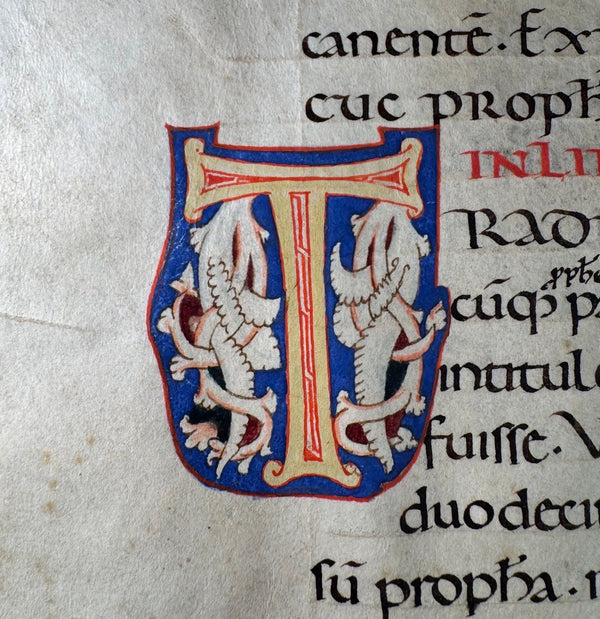
The page shown features the Book of Wisdom through the Prophet Malachi, containing all the major and minor prophets set beneath a magnificent Renaissance woodcut headpiece.
Vatablé, professor at the Collège Royal in Paris, was among the earliest Christian scholars to teach Hebrew publicly. His commentaries and translation methods directly influenced the Geneva translators and later the King James Version.
The 1599 Heidelberg edition by Commelinus continues this tradition of multilingual biblical study — a precursor to the great Polyglot Bibles of Antwerp and London.
⸻
Origin: Heidelberg, Germany — 1599
Printer/Publisher: Commelinus
Languages: Greek, Hebrew, Latin
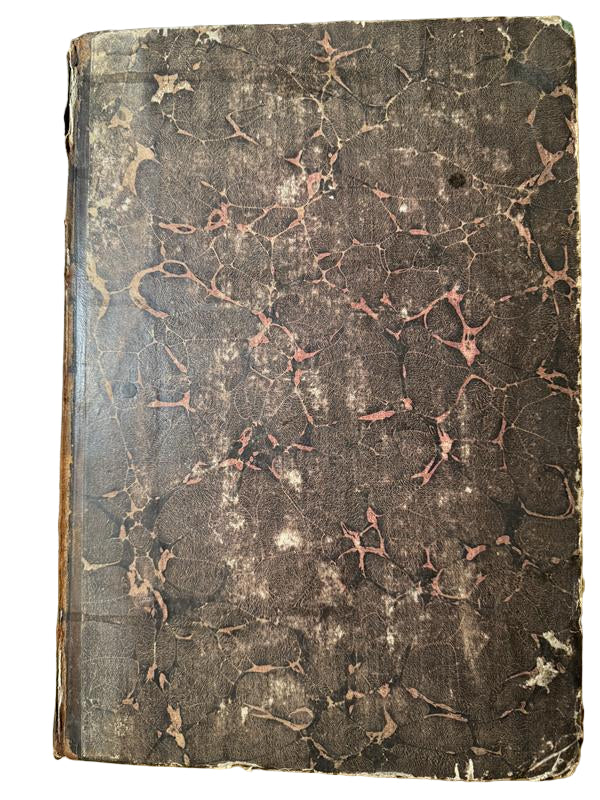
Binding: Contemporary half-leather with marbled boards
Format: Folio (37 × 26 cm)
Pages: 664
Weight: 2.7 kg
⸻
Notable Features
• Parallel columns of Greek, Latin (Clementine Vulgate), and Nova ex Hebraeo Tralatio
• Marginal annotations attributed to Vatablé
• Beautiful Renaissance headpiece and typographic ornamentation
• Solid 16th-century half-leather binding with mottled marbled boards
• Historically significant as an example of Reformation-era Hebrew-Greek philology
⸻
Condition
The volume shows honest age and scholarly use: surface wear to covers, slight browning and foxing typical of 16th-century paper, but remarkably well-preserved.
Text remains clear and crisp throughout.
Binding tight and stable — a robust survival from the late Renaissance.
⸻
Scholarly Importance
This edition embodies the early modern pursuit of textual purity — reconciling Hebrew and Greek originals with ecclesiastical Latin. Vatablé’s influence reached across confessional divides, shaping both Protestant and Catholic biblical scholarship.
As such, this Bible stands at the crossroads of theology, linguistics, and print history.
⸻
An extraordinary artifact of 16th-century sacred scholarship — perfect for collectors of Polyglots, early Bibles, and Hebraica.