

The Divine Library
Medieval Antiphonal Fragment – Gaude Maria Virgo – c. 14th–15th Century
Medieval Antiphonal Fragment – Gaude Maria Virgo – c. 14th–15th Century
Couldn't load pickup availability
An original fragment from a medieval antiphonal, or liturgical choir book, preserving portions of a chant associated with the Marian responsory Gaude Maria virgo (“Rejoice, Virgin Mary”).
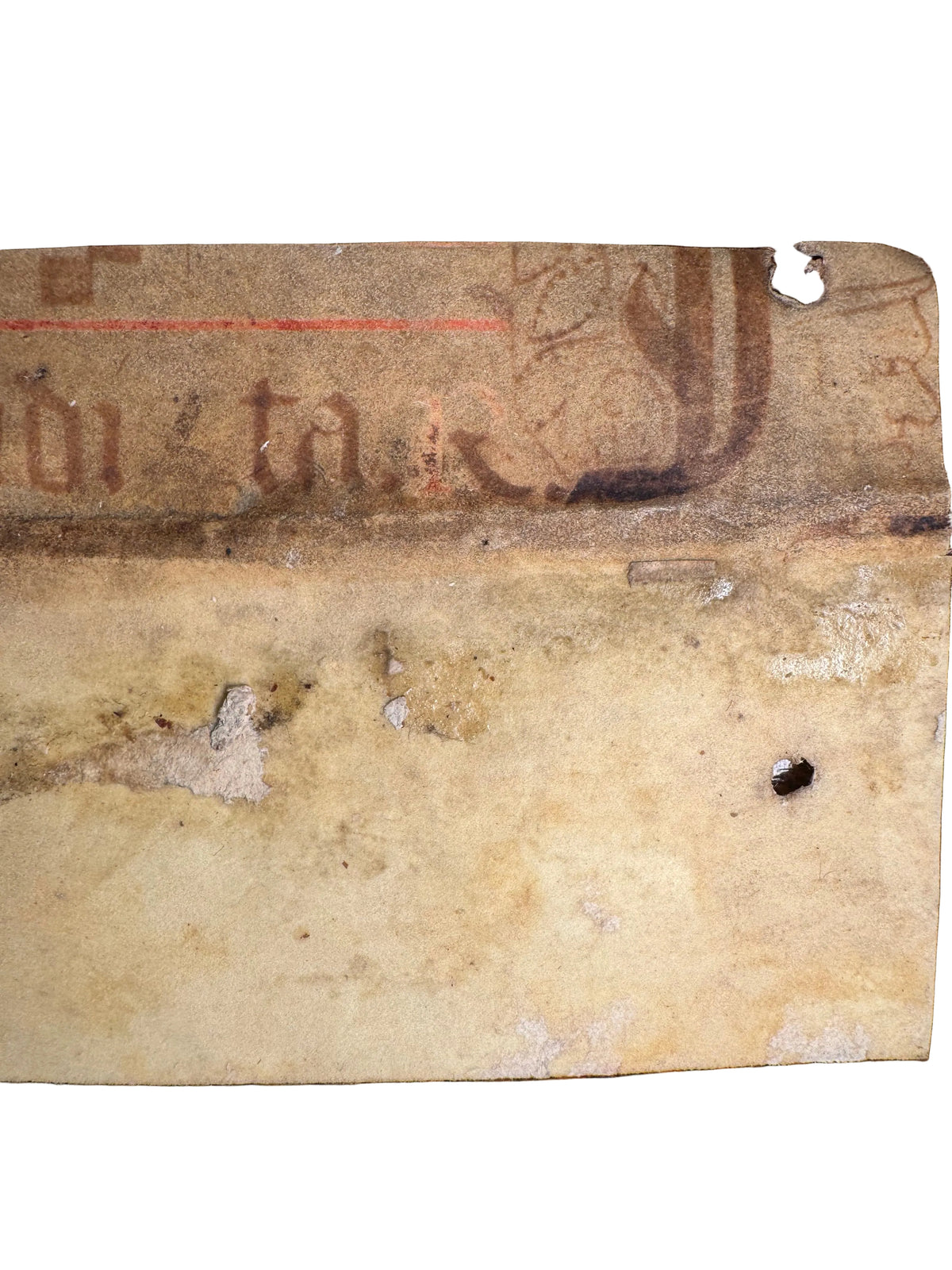
Handwritten on parchment, the fragment features Gothic liturgical script together with medieval square musical notation on four-line red staves. Such large-format antiphonals were used by religious communities for the communal singing of the Divine Office.
The surviving text has been identified with the verse:
Gloria virtus et gratia et tua sunt fortissime rex sanctorum…
Approximately:
“Glory, power, and grace are yours, most mighty King of the saints…”
This verse belongs to the chant tradition surrounding Gaude Maria virgo (CAO 6759), a medieval Marian responsory found in the Divine Office and particularly associated in surviving sources with the Purification of the Virgin Mary (Candlemas), celebrated on February 2.
Of particular interest, another surviving fragment from what appears likely to have been the same parent antiphonal preserves portions of the related Gabrielem archangelum… and Gloria virtus et gratia… material. The similarity of the parchment, Gothic script, red musical staves, notation, physical reuse, and surviving chant text provides compelling evidence that the fragments originated from the same medieval manuscript.
This fragment was later cut down and reused as bookbinding material, a common practice after medieval manuscripts fell out of liturgical use. Its pronounced fold, holes, staining, abrasion, adhesive remnants and areas of text loss preserve physical evidence of this second chapter in its history.
Date: c. 1350–1500
Origin: Western Europe
Language: Latin
Material: Parchment
Manuscript Type: Antiphonal / Divine Office choir book
Text: Gloria virtus et gratia…, associated with Gaude Maria virgo (CAO 6759)
Notation: Medieval square plainchant notation on four-line red staves
Dimensions: Approximately 10½ × 3½ inches
Condition: Fragmentary, with substantial staining, folds, holes, abrasion, text loss and remnants resulting from later reuse as binding material. Please refer to photographs for condition.
A remarkable survivor of medieval Christian worship, preserving both the words and musical notation once sung communally centuries ago, as well as evidence of the parchment’s later reuse in the binding of another book.
Share