

The Divine Library
Medieval Latin Necrological Calendar Manuscript on Parchment, c. 15th Century
Medieval Latin Necrological Calendar Manuscript on Parchment, c. 15th Century
Couldn't load pickup availability
Medieval Latin Necrological Calendar Manuscript on Parchment, c. 15th Century
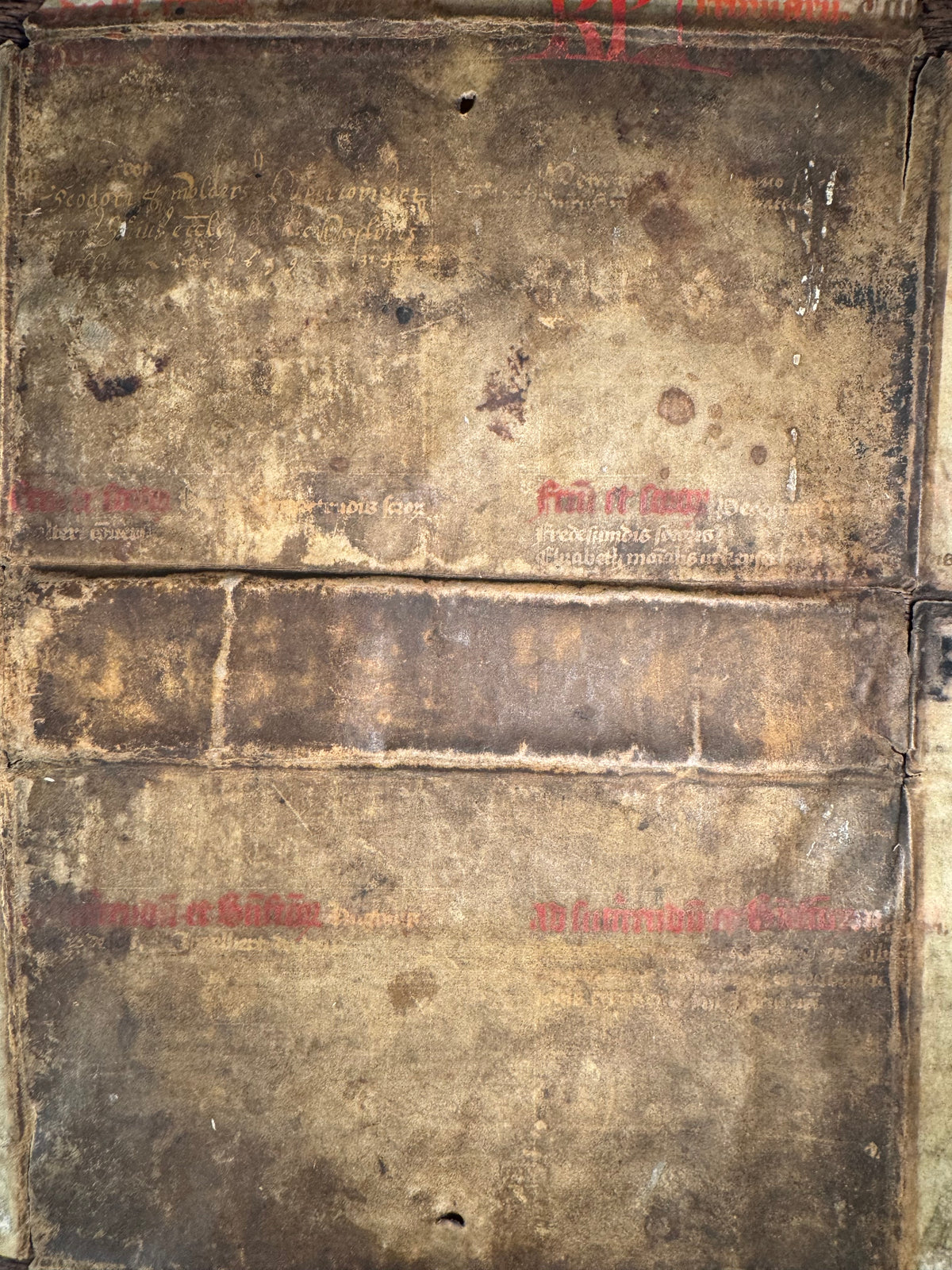
An evocative original medieval manuscript fragment written in Latin on parchment, dating approximately to the 15th century, and apparently originating from an ecclesiastical necrology, obituary calendar, or anniversary register used for the commemoration of deceased members of a religious community.
The manuscript is written in a Gothic hand in dark brown/black ink with prominent rubricated headings in red. Rather than containing continuous theological prose, the surviving text is organized according to the medieval calendar and preserves individual commemorative entries associated with particular days.
Among the clearest surviving rubricated headings are:
Quarto kl. feb. — Quarto Kalendas Februarii, “the fourth day before the Kalends of February,” corresponding to January 29 under Roman inclusive reckoning.
and:
Tercio kl. feb. — Tertio Kalendas Februarii, “the third day before the Kalends of February,” corresponding to January 30.
Beneath these headings are entries naming individuals associated with the religious community. Portions of the surviving text appear to include personal names such as Petrus (Peter), Theodricus (Theodoric/Dietrich), and Johannes (John), together with ecclesiastical terminology including sacerdotis, “of the priest.” Other rubricated terminology appears to reference ecclesiastical offices or groups, including abbots and priests.
The arrangement of dates followed by personal commemorations strongly suggests that the manuscript belonged to a medieval necrological or commemorative calendar. Such books served as institutional records of remembrance, allowing monasteries, churches, chapters, and other religious communities to commemorate deceased clergy, members, and benefactors on the anniversaries of their deaths.
Especially interesting are the later additions in different hands and inks. These entries indicate that the manuscript was not simply produced at one moment but continued to function as a living institutional record, with subsequent generations adding information to the original medieval text.
Later Reuse as Bookbinding Material
At some point after the manuscript ceased serving its original purpose, the parchment was repurposed as binding material, a common practice during the early modern period. Parchment was an exceptionally durable and valuable material, and obsolete medieval manuscripts were frequently cut apart and recycled as covers, wrappers, pastedowns, or structural components of later books and archival volumes.
The pronounced folds, turned edges, attachment holes, staining, abrasion, and darkened areas visible on this fragment preserve clear evidence of this secondary use. In this sense, the piece represents two distinct chapters of European book history: first as a medieval ecclesiastical manuscript and later as recycled material in the construction or protection of another volume.
The manuscript survives in heavily used but remarkably evocative condition, with substantial portions of its original red and dark text remaining legible. Its wear, staining, folds, small holes, and abrasions are consistent with its age and subsequent reuse.
Date: Late medieval, probably 15th century
Material: Parchment / animal-skin membrane
Language: Latin
Script: Gothic
Content: Ecclesiastical necrology, obituary calendar, or anniversary register
Decoration: Red rubrication with dark brown/black manuscript text
Later history: Repurposed as bookbinding/archival binding material
Dimensions: Approximately 26 × 19 cm at largest extent
A fascinating survivor of medieval religious and manuscript culture, preserving not merely a piece of medieval writing but traces of the individuals whom a religious community sought to remember centuries ago.
Please note that medieval manuscripts employ extensive scribal abbreviations, and several readings remain tentative. The manuscript is therefore described conservatively based upon the legible surviving text and physical evidence.
Share